
Spotlight
Uranians, Theodore McCombs (2023)
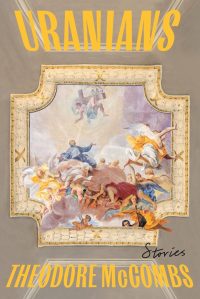 This collection four short stories and one novella brings some fantastic, of-the-moment, science fiction ideas to the table, dealing with topics such as alternate realities, nanotechnologies, artificial intelligence, and longterm space exploration.
Additionally, two of the stories weave in philosophy on queer identities in a really compelling way.
I enjoyed the collection thoroughly, but the standouts for me were, “Toward a Theory of Alternative Lifestyles,” which imagines the breakdown of a relationship in terms of parallel universes of roads not taken, and the absolutely terrifying “Talk to Your Children about Two-Tongued Jeremy,” about an AI tool that goes to extraordinary lengths to get children to live up to their full academic potential. The title story, a novella about a decades-long voyage to an extrasolar planet is also really solid and thought-provoking.
Read this if you’re interested in:
- Short Stories
- Science Fiction
- Technology
- LGBTQ2S+
My Rating: Premise 10, Atmosphere 10, Main Character(s) 10, Plot 9, Intrigue 10, Relationships 10, Success 10, Writing 9, Enjoyment 10, Lasting Impact 10: TOTAL 97
Weekly Roundup
The Lyre of Orpheus (Cornish Trilogy 3), Robertson Davies (1988), 95: With the affairs of Francis Cornish now settled and an artistic foundation set up in his name (see Rebel Angels), Rev. Simon Darcourt and Maria and Arthur Cornish join forces with an eclectic group of artists to finance the completion and performance of an unfinished opera. Meanwhile, Simon tries to find the missing pieces of Francis Cornish’s life story (see What’s Bred in the Bone) in order to complete his biography of his late colleague. I’m a huge fan of Davies’ work, yet I’m always aware of just how out of step it is with today’s artistic, critical, and ethical fashion — a fact of which he must have been aware, since the idea of being out of fashion in one’s talents, interests, and beliefs is a recurring theme in his writing, and nowhere more than here. I wasn’t sure how I felt about this trilogy, but not only did this third installment wrap it all up beautifully, but it’s also a wonderful novel in its own right, a tremendously fun satire and tribute to the arts and the people who love them. (CanLit, the Arts, Academia, Satire)
The Hunger Games (The Hunger Games 1), Suzanne Collins (2008), 95: In a dystopian future, teenagers selected by lot are forced to fight the elements and each other in a reality-TV battle to the death. This book was everywhere fifteen years ago, and after reading it, I can say that it was definitely worth the hype. This is a compelling, exciting, and heart-wrenching read. (YA, Dystopian, Survival, Reality TV, Competition)
The True Love Experiment (Soulmate Equation 2), Christina Lauren (2023), 90: TV producer Connor just wants to make low-budget conservation documentaries and be close to his daughter, but the executives running his company have other plans for him, namely to create a (yet another) reality dating show. But he gets more than he bargained for when he casts the charismatic romance author Felicity ‘Fizzy’ Chen as the lead. This is a great ode to both Romance novels and reality dating shows, even as it uses their tropes and predictability to satirize them. It doesn’t reinvent the wheel, but is a very fun time, with two sparkling and very sexy lead characters. (Romance, Reality TV, Parenthood, Fandom)
A Fatal Grace (Inspector Gamache 2), Louise Penny (2011), 87: Inspector Gamache is called back to the idyllic town of Three Pines when a would-be design and spirituality guru is electrocuted during a community curling event. I’ve been told this is the least loved book in this series, and I can understand why. There were some strange pacing issues (for example, the murder doesn’t take place until well into the novel), and the murder itself was so convoluted as to strain my suspension of disbelief to its limits. But, in Penny’s more than capable hands, it’s still a really enjoyable book, and any time in Three Pines with Armand Gamache is time well spent. (Mystery, Detective, Quebec, Winter, Curling)
The Stone Angel, Margaret Laurence (1964), 82: An ill-tempered ninety year-old reminisces about her difficult life as she has hard conversations about her care and living situation with her son and daughter-in-law. Elder care is a huge and hard conversation in many families and Laurence did a tremendous job showing the big and small humiliations of aging with a compassionate lens for all involved. What’s interesting — and what ultimately doesn’t work for me — is that she chose a group of rather horrible characters through which to explore this important topic. It’s an extraordinary book, but I hated every minute of reading it. (Aging, Elder Care, Complex Families, Motherhood)
Fake Dates and Mooncakes, Sher Lee (2023), 79: Dylan is a Brooklyn high school student who works at his aunt’s Singaporean takeout restaurant to help make ends meet; Theo is the half-Chinese son of a wealthy white tech investor, who feels disconnected from his Chinese heritage. Together they try to recreate the magic of Dylan’s grandmother’s lost mooncake recipe in time to compete in a competition that could change everything for his family. This was a cute, solid ‘first-generation YA romance’ story, but doesn’t do much except to fill in the blanks expected from the subgenre. If you go into this simply wanting to to swoon a bit at young love and to whet your appetite for dumplings, you won’t be disappointed. (YA, Immigrant Experiences, Romance, LGBTQ2S+, Singaporean Culture)
The Heart of Darkness, Joseph Conrad (1899), 72: A sailor witnesses horrors as he ventures into European-dominated Sub-Saharan Africa toward the end of the nineteenth century. It’s easy to see why this is a revered classic, with its eloquent writing and psychological depth. But, despite its anti-colonial sentiments, it is still very much of its time and perpetuates racist tropes of European superiority even as it critiques them. Its literary value is severely limited by its worldview. (19th C History, Colonialism, Imperialism, Racism, African History, Obsession)
 Matt's Books and Music
Leave a comment