

Spotlight
The Endless Vessel, Charles Soule (2023)
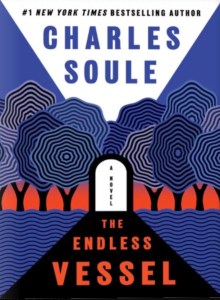 This expansive work of speculative fiction takes place in a near-future world in which humanity is on the brink of disaster, not only from climate change and its consequences, but also from a devastating pandemic of depression and despair known as ‘the Grey’. One woman, Lily Barnes, upon being shown a device that could revolutionize carbon-capture technology overnight, tracks down the mysterious corporation that lies behind it. But time is running out, as another, far more public group, is weaponizing despair to push humanity over the edge once and for all.
This is unlike anything I’ve read before, spanning three centuries and three continents, part alternative history, part science fiction. It’s a great piece of speculative fiction, but also an eerily poignant statement about the dangers of despair and possibilities of connection through it all.
Read this if you’re interested in:
- Speculative Fiction
- Dystopian Fiction
- Pandemic Fiction
My Rating: Premise 10, Atmosphere 10, Main Character(s) 10, Plot 10, Intrigue 10, Relationships 10, Success 10, Writing 9, Enjoyment 9, Lasting Impact 10: TOTAL 94
Weekly Roundup
Mrs. Caliban, Rachel Ingalls (1982), 96: A lonely suburban housewife finds companionship in a humanoid amphibian recently escaped from a scientific lab, as she tries to figure out the next steps for her marriage and supports a friend navigating parenting and relationship problems of her own. There’s a lot of standard second-wave feminist fare here about gender roles, isolation, and otherness. But what sets this apart is the the tightness of the plot and strong writing. It’s a strange book, to be sure, but excellent. (Second Wave Feminism, Loneliness, Otherness, Isolation, Complicated Family, Friendship)
The Swifts, Beth Lincoln (2023), 94: For as long as anyone can remember, members of the Swift family have received their names — and destinies — from a randomly selected word from the dictionary. After family matriarch Arch-Aunt Schadenfreude is pushed down a flight of stairs during a family reunion, sisters Felicity, Phenomena, and Shenanigan try to figure out who was behind the attack. In addition to being a fun middle grade mystery, this is a delightful celebration of the joys of language. It’s reminiscent of the best middle grade novels of the ‘70s and ‘80s in its intelligence and whimsy. Highly recommended! (Middle Grade, Mystery, Family, Destiny)
The Postcard, Anne Berest (2021, trans. 2023), 93: A woman in contemporary France investigates the origins of a mysterious postcard sent to her mother’s house with nothing written on it except for the names of family members killed in the Holocaust. This is a beautiful novel about the desire to forget the past, and the dangers of doing so. I enjoyed it, but was unevenly interested in the different timelines and stories it tells. (20th C History, Judaica, WWII, Holocaust, Anti-Semitism, Family, Memory)
Farrell Covington and the Limits of Style, Paul Rudnick (2023), 92: As a college freshman in the 1970s, Nate, a ‘nice Jewish boy’ from the suburbs, meets Farrell, the immensely stylish son of a robber-baron family, and the rest is history. Specifically five decades of queer history. As befits its title, what makes this book stand out most is its style. For better and for worse, it has a narrative panache worthy of the loftiest icons of queer wit, charm, and flair. But hidden beneath this flashy exterior is a story of surprising depth, particularly in the last two thirds. (LGBTQ2S+, Cultural History, Theatre, Found Family, HIV/AIDS)
Small Joys, Elvin James Mensah (2023), 83: Harley, young Black British man experiencing severe mental health challenges in the mid ‘00s, slowly learns to trust his friends, himself, and the joys of little things after his new flatmate Muddy takes him under his wing. There’s a lot to admire about this debut novel. The representation of certain aspects of the Black British experience, particularly around religion and masculinity, was very well done, as were the depictions of Harley’s struggles with his negative thinking patterns and low self worth. I also appreciated the focus on friendship, rather than on romantic connection. But some of these strengths were also things that made me enjoy it a bit less that I would have otherwise. For example, the first-person narration was strong and realistic, but it also meant we spent a lot of time inside a mind that was lying to its person, and to us, and after a while this was a very hard place to be. And, while I loved that Harley’s friends were imperfect — they often said and did the wrong things, and were patronizing and literally paternalistic towards him — but still managed to help him by simply being present for him, they were still often very cringey. And on a similar note, while I loved Muddy as this wonderful cinnamon bun of a friend, I do wish the book did a bit more work in showing why he cared for Harley despite Harley caring so little for himself. All in all, I found this to be a good but flawed book. (Friendship, Black British Experience, Mental Health, LGBTQ2S+)
Rayne and Delilah’s Midnite Matinee, Jeff Zentner (2019), 75: Two teenage girls who’ve built a cult following for their cable access television show face the prospect of what the end of high school might mean for them and their creation. More than most YA novels, the teenagers at the heart of this one read as teenagers and their problems felt realistic as the kinds of things teenagers deal with, both big and small. Unfortunately, this wasn’t necessarily a good thing. The most important source of plot and conflict in the book was entirely generated by one of the main character’s emotional blackmail of the other, and even at the 90% mark, this dynamic was still in place. While it was resolved, whatever emotional labour the character needed to do to move past it happened off the page, and there wasn’t any real recognition of the awful position she’d placed her friend for pretty much the whole book. (YA, coming of age, change, dreams, loss)
One Italian Summer, Rebecca Serle (2022), 73: After the death of her beloved mother, Katy isn’t sure what she wants out of life. Leaving her husband behind, she travels to Italy’s Amalfi Coast to relive her mother’s favorite Summer, where she meets a new friend, who turns out to be her mother’s younger self. There were exactly three things I liked about this book: The way grief rippled through the rest of Katy’s life, the gorgeous setting, and the ending. Everything else was very much not for me. (Grief and Loss, Mothers and Daughters, Being in Choice, Adulthood, Vacation, Italy)
 Matt's Books and Music
Leave a comment