
Spotlight
In Memoriam, Alice Winn (2023)
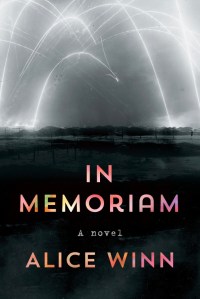 At an elite boarding school in the early 1910s, two teenage boys with high hopes and big ideas of truth and beauty fall in love — not that they’d ever dare tell each other. But the First World War first separates them and then unites them in its unimaginable horrors, changing them, and their relationship, for ever.
This is a thoroughly-researched and well-written novel that precisely hits the mark. I’ve read a lot of WWI novels, but never have I encountered one that captured the realities of the transition from school-boys to soldiers to cannon-fodder so well. It also does a wonderful job of portraying the naivete of the British ruling classes, from their Classics-heavy educational curriculum designed to instill their sons with beautiful visions of glory and honour, to their utter ignorance about the realities of colonial life. These big issues of class, race, and imperialism are never heavy-handed here, but never far from the book’s story.
I did have some minor quibbles here and there — particularly some coincidences in the plotting, and the evergreen problem of writing teenagers who are a little too articulate — but these were readily forgiven in what is overall a rich, impactful novel that tore my heart to pieces many times over.
Two interesting companion reads that come to mind are Timothy Findley’s The Wars (1977), which covers some similar ground from a Canadian perspective, and Julie Berry’s Lovely War (2019), which situates the War as part of the eternal struggle among the Greek gods.
Read this if you’re interested in:
- First World War
- Boarding School
- Teenage Protagonists
- War is Hell
- LGBTQ2S+
My Rating: Premise 10, Atmosphere 10, Main Character(s) 10, Plot 8, Intrigue 10, Relationships 9, Success 10, Writing 9, Enjoyment 10, Lasting Impact 10: TOTAL 96
Weekly Roundup
Still Life (Inspector Gamache 1), Louise Penny, 94: Chief Inspector Armand Gamache is called to an idyllic community in the Eastern Townships of Quebec when a beloved local woman is killed by an arrow through the chest. No one could be a suspect and yet everyone is. I have been hearing about this series for years but had resisted picking it up until now. And boy do I understand now what the fuss is about, and why this eighteen year-old book had a twelve-week wait at my local public library. This is well-written, well-plotted, and rich in psychological insight. And, rumour has it, the series only gets better from here. (Mystery, Quebec, Eastern Townships, Murder, Small Towns)
Train Dreams, Denis Johnson (2011), 94: A short but impactful novella of the difficulties of life in the bygone world of the Old West and the ravages of grief on one man. This is a very short book, coming it at just over a hundred pages, and this is the perfect length for this book. It’s the literary equivalent of a gorgeous old black and white photograph from Life magazine. (American History, Twentieth Century, the West, Grief and Loss)
The Collected Regrets of Clover, Mikki Brammer (2023), 85: A death doula in New York City who has not yet managed her own grief over the death of her grandfather a decade ago, renews her commitment to living a good life. I wanted to love this new release; it deals with a lot of important issues and has some great characters and situations. Unfortunately, it just felt a little clunky to me, particularly in the dialog. But this is still a lovely and very worthy read. (Grief and Loss, Death and Dying, Regret, New York City)
The Rook, The Checquy Files 1, Daniel O’Malley (2012), 85: A woman wakes up with no memory of her identity, but with a letter on her person telling her she’s actually an official in a secret supernatural organization, and it’s up to her to stop whoever attacked her. I genuinely enjoyed this as I was reading it, but the more I think about it, the more wobbly the plot actually seems. So I’d call this fun, but not much more than that. One exceptional element I’d like to praise it for is how it plays with the idea of identity and how, stripped of our memories and life experiences, we aren’t really ourselves. (Mystery, Supernatural, Secret Societies, Identity, Memory)
The Blind Assassin, Margaret Atwood (2000), 77: In the waning weeks of her life, a former Southern Ontario socialite looks back on the events the led to her sister’s shocking death. This was pretty much my quintessential Margaret Atwood experience: I was blown away by the quality of the writing but I completely hated the experience of reading this. The whole book hangs on the mystery of how the different stories (there are four main plot lines) fit together, and that was impeccably done — for this alone the Booker Prize this won was deserved — the problem for me was that I actively disliked every plot; Atwood seems to delight in stories devoid of any joy, love, hope, or meaning, and that really doesn’t work for me. (Canadian Literature, 20th C History, Class, Politics, Truth)
Beirut Blues, Hanan al-Shaykh (1992), 75: A woman living in Beirut writes letters to the people and places on her mind during the long years of the Lebanese Civil War, as her city and society crumble around her and she wonders whether it might be time to leave. I have mixed feelings about this book. The insights into the experience of living in a war-zone are brilliant and the atmosphere of it all is so richly rendered, and on this count I must applaud the author and would highly recommend the book to others. And yet, overall, it just didn’t work for me. The letters were long streams-of-consciousness that I found hard to follow and repetitive, and I found myself wanting to skim vast sections of it just to get on with things. (Twentieth Century, Lebanon, Middle East, Arab Culture, War)
The Vicar and the Rake, Annabelle Greene (2020), 74: A smalltown vicar has his simple, salt-of-the-earth life turned upside down by the return of a notorious, scandal-ridden rake, who happens to have been his childhood best friend and secret crush. This is a pretty typical, ‘it does what it says on the box,’ historical romance. But even by these standards its plotting relied on coincidences that stretched the suspension of disbelief of even the most hardened Romance readers. I will say, though, it has probably the best ‘declaration of love’ speech I’ve encountered in such books. Overall a perfectly serviceable read. (Historical Romance, LGBTQ2S2+)
 Matt's Books and Music
Leave a comment